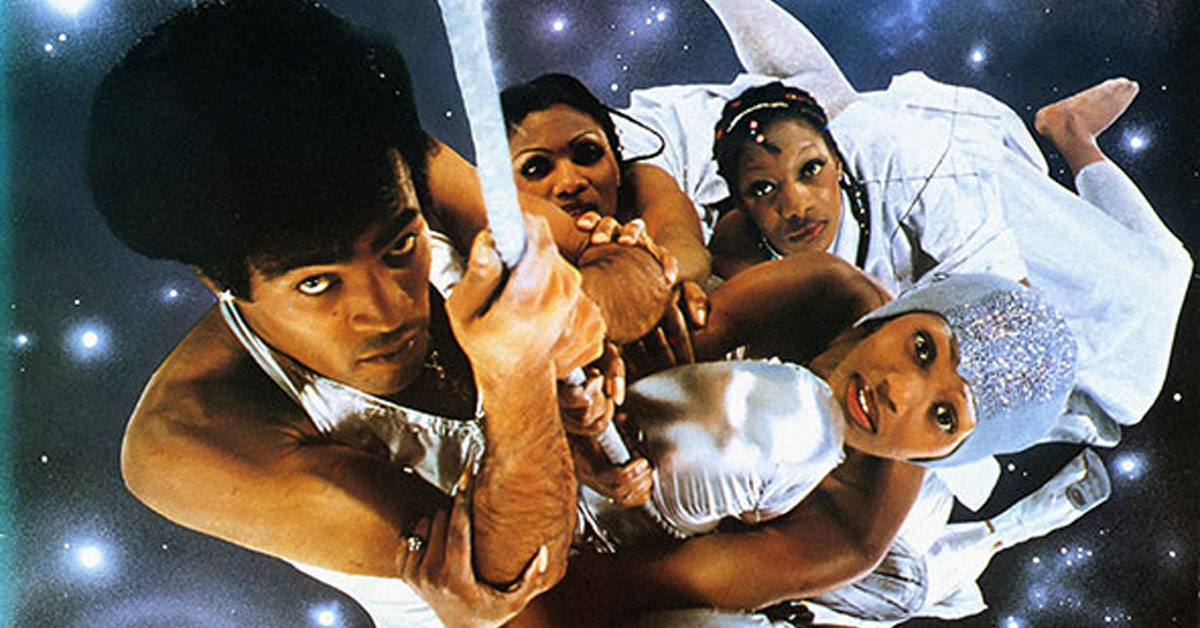









So here I am sitting at my house, just chilling and checking the list of records I need to rip to digital, when I come across this one: BONEY M. Nightflight to Venus. That kinda makes me smile. I check the list and it turns out I actually have EIGHT Boney M albums to rip. So I strap myself in for a disco trip and away we go.
The first thing I notice is the incredible clarity of the recordings. People often deride disco as a whole, but tend to forget how fantastic the records were in terms of sonic purity. The recording engineers who captured these sounds were at the top of their game at a time when perfection was demanded above all else. The bass is PHAT and the horns and strings are out of this world. The beats are simple 4/4 for the most part, but every now and then there are little fills that are pure magic. If there is one weakness in classic disco recordings, it’s probably the drums, the snare is generally sharp, but the rest of the kit can sound a little thin to modern ears. Boney M, though, are a happy exception: the drums are fully THERE and present in the mix, carrying the music along like a galloping horse.
One thing I found myself doing as I recorded these albums (aside from shaking my butt and singing along a lot) was smiling. These are notoriously happy songs. No matter the subject of the lyrics, the melodies are almost relentlessly joyful and uplifting. It hadn’t actually dawned on me until this afternoon, but so much of that carefree joy is missing from a lot of modern music. These songs are so much less jaded than what we’ve become used to.
This isn’t to say that every track Boney M put to wax is a classic, there are a few real duds (I’m looking at you, “Do You Wanna Bump”), but mostly the listening experience is a really, really good one. Since I was recording the albums at the same time as listening, I didn’t have the option to skip anything, and honestly I didn’t want to. It was nice to have consistently feel-good albums on the turntable!
Of course it also helped that one of those albums was 20 Golden Hits. Yes, there were actually 20 songs that could be classified as golden hits. It suffers slightly from having almost 30 minutes of music per side, but it still sounds better than some tinny CDs I’ve heard. In some countries this album was released with only 12 tracks (mine is a Canadian edition, Atlantic XSD 15000), and while the eight omitted songs are very good, they’re not essential. The 20-track version is great fun (mine is from Atlantic UK, BMTV 1), but since it crams everything onto two sides of a single record, the 12-track version actually tends to have better sound reproduction. Either way, if you’re lucky enough to find a copy, do yourself a favour and pick it up.
A word of warning on compilations: there was a CD released in 1992 called The Magic of Boney M (blue cover) and another in 2006 with the same name and another blue cover, both feature re-recordings and remixed versions of the songs. Avoid these. Track down the original 1979/1980 release with the die-cut gold cover. That’s the one you want.
Something else I noticed while listening: Boney M’s earlier albums had quite a few covers on them. My theory is that on the first LP especially, they were in a hurry to capitalize on their first hit single and simply hadn’t written enough original material yet. Whatever the reason, I really enjoy their takes on other people’s songs, wait until you hear their disco version of Iron Butterfly’s “Inna Gadda Da Vida”! Other artists they’ve covered include 10cc, The Beatles, Neil Young, and Bob Marley.
Anyone who grew up in the 70s or 80s will surely have heard Boney M’s biggest hit, “Rivers of Babylon” (originally recorded in 1970 by The Melodians), but some equally deserving tracks include “Rasputin”, “Boat on the River”, “Daddy Cool”, “Ma Baker”, “Sunny”, and their Christmas mega-hit “Mary’s Boy Child”.
It is amazing to think that they weren’t even a real band! Producer Frank Farian sang all the vocals on the first few tracks, using studio trickery to alter the pitch of his voice for the different parts. He eventually hired models and dancers to mime for the cameras as “Boney M”, with Precious Wilson later becoming the main female vocalist, though her voice was typically used for all three harmony parts simultaneously. In concert they performed live, and somehow they got away with it. (I suspect there was a lot of lip syncing involved, haha!) Why does it not surprise me that this same Frank Farian was later the genius behind Milli Vanilli? It worked once…
Be that as it may, the validity of their art is not in question here. All I want to talk about is the end product, and what an end product it is. It will get you dancing.
Of their eight studio albums (including their seminal Christmas album), the first four are the strongest. The law of diminishing returns definitely applies here, the albums get progressively less interesting over time. Bonoonoonoos and 10,000 Light Years are still fun in their own way, but their final outing, Eye Dance from 1985, is dreadful.
If you can only commit to one original album, make it their third, Nightflight to Venus, you’ll get “Rivers of Babylon” and “Rasputin”, though you’ll miss “Sunny”, “Ma Baker” and “Daddy Cool”. Other essentials for any collection: The Boney M Christmas Album (yes, I know… but it’s just so much fun!) and the original 20 Golden Hits.
#MusicBoxTW